
When Breath Becomes Air
If the weight of mortality does not grow lighter, does it at least get more familiar?

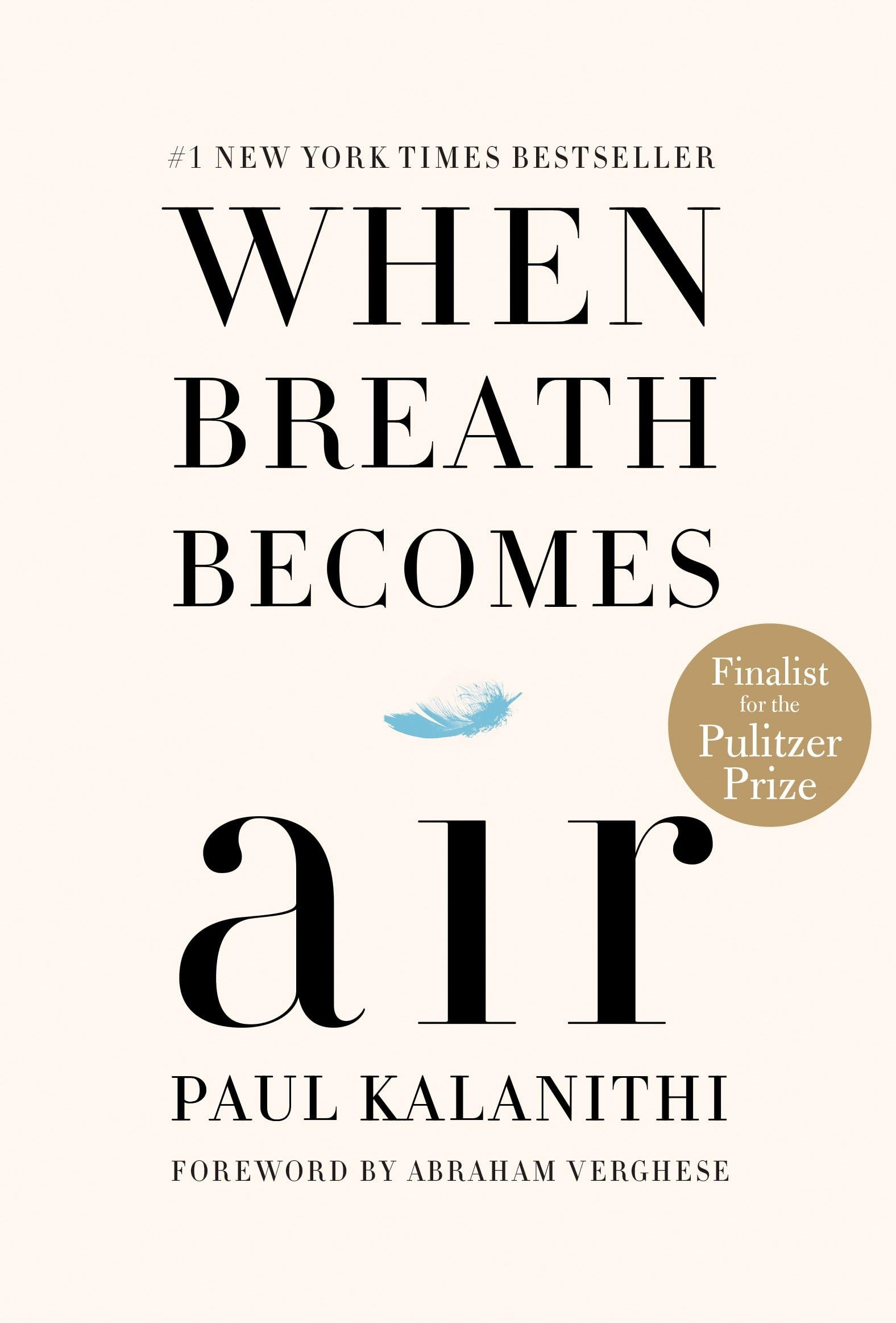
When Breath Becomes Air is a meditation on purpose, identity, and the edge of life—written by a man who, faced with death, chose not to flinch. Paul Kalanithi, a neurosurgeon with a philosopher’s soul, did not merely confront terminal cancer; he made of it a mirror, and asked it the deepest questions. What does it mean to live? To matter? To remain yourself as everything—ambition, health, future—falls away?
This is not a tragedy. Though marked by grief, the story carries light. It reveals how one can live meaningfully not in spite of death, but because of it.
What makes Paul’s journey unforgettable is not just his brilliance, but his evolving sense of self. As cancer redefined his limits, he continually reasserted who he was—not by clinging to old versions of himself, but by shaping new ones. Identity, for Paul, was not fixed. It flowed: through literature, through surgery, through love. Each transformation was an act of becoming.
He was frail, but not weak. Uncertain, but not aimless. Still, but not stagnant. There is a quiet force in this book—the kind that does not shout, but stays with you.
Paul had been on a meteoric trajectory, poised to lead in one of medicine’s most elite fields. Then, in the space of a single scan, the future he had trained for disappeared. Most of us delay the existential questions. Paul had to confront them head-on: Who am I now? What does a meaningful life look like when time is short? But these questions didn’t defeat him. They revealed him.
He was a polymath who saw no contradiction in wielding both a scalpel and a pen. For Paul, surgery was just as much moral responsibility as technical excellence. He wrote that when something has weight, it has gravity—and you are drawn to it. That is what a calling feels like. You don’t choose it. It claims you.
And perhaps the most profound part of his story is his relationship with his wife, Lucy. Illness can break people apart. But Paul and Lucy chose to draw closer. Through struggle, they deepened their connection. As Confucius taught, when one relationship deepens, all others can too. Their love became a lens through which Paul felt the world more fully, and opened himself to its beauty and pain.
Book clubbing this (with Wyatt, Steven, Anya, Eddie, Ritvik) was a new experience. It reminded me that we all hunger not just for careers, but for callings. Not just for time, but for meaning. That love and purpose are not things we find only in triumph, but more often in surrender—in choosing to stay, to be present, to face the hardest things with eyes open.
When Breath Becomes Air is not a manual for dying. It’s a guide for living—bravely, honestly, and with grace. A well-lived life, it teaches, is not one free of hardship. It is one that remains committed to meaning, even in the face of deep loss.
10/10
(Thank you Aayush for your copy of the book. So glad we went to the sauna that day.)
Selections:
Throughout college, my monastic, scholarly study of human meaning would conflict with my urge to forge and strengthen the human relationships that formed that meaning. If the unexamined life was not worth living, was the unlived life worth examining?
—
I don't believe in the wisdom of children, nor in the wisdom of the old. There is a moment, a cusp, when the sum of gathered experience is worn down by the details of living. We are never so wise as when we live in this moment.
—
Moral speculation was puny compared to moral action.
—
“Which is worse, being born too early or waiting too long to deliver?”
“Judgement call.”
What a call to make.
—
This is how 99% of people select their jobs: pay, work environment, hours. But that’s the point. Putting lifestyle first is how you find a job—not a calling.
—
I had started in this career, in part, to pursue death: to grasp it, uncloak it, and see it eye-to-eye, unblinking.
Neurosurgery attracted me as much for its intertwining of brain and consciousness as for its intertwining of life and death. I had thought that a life spent in the space between the two would grant me not merely a stage for compassionate action but an elevation of my own being: getting as far away from petty materialism, from self-important trivia, getting right there, to the heart of the matter, to truly life-and-death decisions and strug-gles... surely a kind of transcendence would be found there?
But in residency, something else was gradually un-folding. In the midst of this endless barrage of head injuries, I began to suspect that being so close to the fiery light of such moments only blinded me to their nature, like trying to learn astronomy by staring directly at the sun. I was not yet with patients in their pivotal moments, I was merely at those pivotal moments. I observed a lot of suffering; worse, I became inured to it.
—
He'd assess the abdomen, then ask for my prognosis on a patient's cognitive function. "Well, he could still be a senator," I once replied, "but only from a small state." Jeff laughed, and from that moment on, state population became our barometer for head-injury severity.
"Is he a Wyoming or a California?" Jeff would ask, trying to determine how intensive his care plan should be.
Or I'd say, "Jeff, I know his blood pressure is labile, but I gotta get him to the OR or he's gonna go from Washington to Idaho can you get him stabilized?"
—
For amid that unique suffering invoked by severe brain damage, the suffering often felt more by families than by patients, it is not merely the physicians who do not see the full significance. The families who gather around their beloved-their beloved whose sheared heads contained battered brains do not usually recognize the full significance, either. They see the past, the accumulation of memories, the freshly felt love, all represented by the body before them. I see the possible fu-tures, the breathing machines connected through a surgical opening in the neck, the pasty liquid dripping in through a hole in the belly, the possible long, painful, and only partial recovery—or, sometimes more likely, no return at all of the person they remember. In these mo-ments, I acted not, as I most often did, as death's enemy, but as its ambassador.
—
Had I been more religious in my youth, I might have become a pastor, for it was the pastoral role I’d sought.
—
By this point, I had learned a couple of basic rules. First, detailed statistics are for research halls, not hospital rooms. The standard statistic, the Kaplan-Meier curve, measures the number of patients surviving over time. It is the metric by which we gauge progress, by which we understand the ferocity of a disease. For glioblastoma, the curve drops sharply until only about 5 percent of patients are alive at two years. Second, it is important to be accurate, but you must always leave some room for hope. Rather than say-ing, "Median survival is eleven months" or "You have a ninety-five percent chance of being dead in two years," I'd say, "Most patients live many months to a couple of years." This was, to me, a more honest description. The problem is that you can't tell an individual patient where she sits on the curve: Will she die in six months or sixty?
I came to believe that it is irresponsible to be more precise than you can be accurate. Those apocryphal doctors who gave specific numbers ("The doctor told me I had six months to live"): Who were they, I wondered, and who taught them statistics?
—
One of the early meanings of patient is “one who endures hardship without complaint.”
—
In residency, there's a saying: The days are long, but the years are short.
—
I could see that there were two strategies to cutting the time short, perhaps best exemplified by the tortoise and the hare. The hare moves as fast as possible, hands a blur, instruments clattering, falling to the floor; the skin slips open like a curtain, the skull flap is on the tray before the bone dust settles. As a result, the opening might need to be expanded a centimeter here or there because it's not optimally placed. The tortoise, on the other hand, proceeds deliberately, with no wasted movements, measuring twice, cutting once. No step of the operation needs revisiting; everything moves in a precise, orderly fashion. If the hare makes too many minor missteps and has to keep adjusting, the tortoise wins. If the tortoise spends too much time planning each step, the hare wins.
—
You can’t ever reach perfection, but you can believe in an asymptote toward which you are ceaselessly striving.
—
My life has been building potential, potential that would now go unrealized.
—
Therein was the paradox: like a runner crossing the finish line only to collapse, without that duty to care for the ill pushing me forward, I became an invalid
—
Planning a life together, unaware, never suspecting their own fragility
—
It occurred to me that my relationship with statistics changed as soon as I became one.
—
If the weight of mortality does not grow lighter, does it at least get more familiar?
—
Once I had been diagnosed with a terminal illness, I began to view the world through two perspectives; I was starting to see death as both doctor and patient. As a doctor, I knew not to declare "Cancer is a battle I'm going to win!" or ask "Why me?" (Answer: Why notme?) I knew a lot about medical care, complications, and treatment algorithms. I quickly learned from my oncologist and my own study that stage IV lung cancer today was a disease whose story might be changing, like AIDS in the late 1980s: still a rapidly fatal illness but with emerging therapies that were, for the first time, providing years of
life.
While being trained as a physician and scientist had helped me process the data and accept the limits of what that data could reveal about my prognosis, it didn't help me as a patient. It didn't tell Lucy and me whether we should go ahead and have a child, or what it meant to nurture a new life while mine faded. Nor did it tell me whether to fight for my career, to reclaim the ambitions I had single-mindedly pursued for so long, but without the surety of the time to complete them.
Like my own patients, I had to face my mortality and try to understand what made my life worth living and I needed Emma's help to do so. Torn between being a doctor and being a patient, delving into medical science and turning back to literature for answers, I struggled, while facing my own death, to rebuild my old life or perhaps find a new one.
—
Darwin and Nietzche agreed on one thing: the defining characteristic of the organism is striving.
—
I was searching for a vocabulary with which to make sense of death… Hemingway described his process in similar terms: acquiring rich experiences, then retreating to cogitate and write about them. I needed words to go forward.
—
Moral duty has weight, things that have weight have gravity, and so the duty to bear mortal responsibility pulled me back into the operating room.
—
The way forward seemed obvious, if only I knew how many months of years I had left. Tell me three months, I’d spend time with family. Tell me one year, I’d write a book. Give me ten years, I’d get back to treating diseases. The truth that you lived one day at a time didn’t help: What was I suppose to do with that day?
—
The physicians duty is not to starve off death or return patients to their old lives, but to take into our arms a patient and family whose lives have disintegrated and work until they can back up and face, and make sense of. their own existence.
—
Emma hadn’t given me back my old identity. She’d protected my ability to forge a new one.
—
I was neither angry nor scared. It simply was. It was a fact about the world, like the distance from the sun to the earth.
—
WICOS: Who Is The Captain Of the Ship?
—
Time for me is now double-edged: every day brings me further from the low of my last relapse but closer to the next recurrence and, eventually, death. Perhaps later than I think, but certainly sooner than I desire.
There are, I imagine, two responses to that realization.
The most obvious might be an impulse to frantic activity: to "live life to its fullest," to travel, to dine, to achieve a host of neglected ambitions. Part of the cruelty of cancer, though, is not only that it limits your time; it also limits your energy, vastly reducing the amount you can squeeze into a day. It is a tired hare who now races. And even if I had the energy, I prefer a more tortoiselike approach. I plod, I ponder. Some days, I simply persist.
—
If time dilates when one moves at high speeds, does it contract when one moves barely at all? It must: the days have shortened considerably.
—
Medical training is relentlessly future-oriented, all about delayed gratification; you're always thinking about what you'll be doing five years down the line. But now I don't know what I'll be doing five years down the line. I may be dead. I may not be. I may be healthy. I may be writing.
I don't know. And so it's not all that useful to spend time thinking about the future-that is, beyond lunch.
—
Everyone succumbs to finitude. I suspect I am not the only one who reaches this pluperfect state. Most ambitions are either achieved or abandoned; either way, they belong to the past. The future, instead of the ladder toward the goals of life, flattens out into a perpetual present. Money, status, all the vanities the preacher of Ecclesiastes described hold so little interest: a chasing after wind, indeed.
—
There is perhaps only one thing to say to this infant, who is all future, overlapping briefly with me, whose life, barring the improbable, is all but past.
That message is simple:
When you come to one of the many moments in life where you must give an account of yourself, provide a ledger of what you have been, and done, and meant to the world, do not, I pray, discount that you filled a dying man's days with a sated joy, a joy unknown to me in all my prior years, a joy that does not hunger for more and more but rests, satisfied. In this time, right now, that is an enormous thing.
—
We each joked to close friends that the secret to saving a relationship is for one person to become terminally ill. Conversely, we knew that one trick to managing a terminal illness is to be deeply in love to be vulnerable, kind, generous, grateful.
—
When Paul told me, immediately after his diagnosis, to remarry after he died, it exemplified the way he would, throughout his illness, work hard to secure my future.
He was fiercely committed to ensuring the best for me, in our finances, my career, what motherhood would mean. At the same time, I worked hard to secure his present, to make his remaining time the best it could be, tracking and managing every symptom and aspect of his medical care the most important doctoring role of my life while supporting his ambitions, listening to his whispered fears as we embraced in the safety of our darkened bedroom, witnessing, acknowledging, accept-ing, comforting.
—
We all inhabit different selves in space and time.
—
Frail but never weak.
—