
TL;DR: Saving Face With Family Members: Corrective Facework After Reconciling With a Romantic Partner

Summary
Studying the communication to our friends & family about changes in romantic relationships. People tend to overshare, undershare, or hedge their language in such situations.
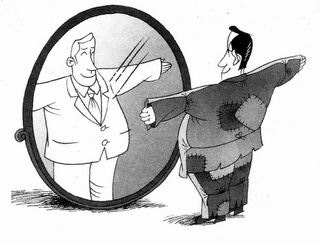
In negotiations, dispute resolution involves giving the counterparty the ability to "save face," which helps them carry their dignity & maintain trust. I've seen this play out a lot in the business world but I think taking a look at how they occur in more intimate, personal situations gives you leads as to how you yourself work. Saving face is applied in romantic contexts with disputes like breakups, divorces, or even small daily disputes.
The article supplements technical phrases like with good real-life wording examples. The goal of the study is to answer the question: How do people interact with family members and manage face needs when talking to family about aromantic relationship reconciliation?
Face: the conception of self that each person displays in particular interactions with others”
Facework: communicative strategies that are the enactment, support, or challenge of situated identities
(a) presentation of self
(b) responding to face threats
(c) threatening the face of others
d) protecting the face of others
(e) building the face of others.
Positive face: positive self-identity or image
Negative face: centers around one’s desire to be autonomous and free from imposition
People perform corrective facework when their identity is challenged by another person or situation -- ex: reconciling to your family that you're getting back together with a spouse that cheated
Hedging: saying neither more or less than is cooperatively necessary; being ‘to the point’; and being perspicuous, neither vague nor ambiguous
Facework that people use in embarrassing social situations:
Excuses: any attempt to minimize responsibility for an event
Justifications: reframing an event by downplaying its negative implications
I think good business leaders are very good at this. Would love to see a study about how startup leaders frame justifications on both positive and negative consequential events in their journey
Remediation: proactive attempts to corrector repair damage
Apologies
People tend to apologize for their own actions rather than the actions of their partner
Avoidance, humor, escape, aggression
Findings:
Active corrective facework
Updating family about the relationship problem
Updated family members who knew about the problem
Updated family, but set up rules
specifically stating that she did not have to explain it
Updated family, but hedged about relationship
downplay seriousness of reconciliation so you don't have imposing questions
Accounting for reconciliation
Using socially approved vocabularies... like apologies and excuses
Partners trying to manage their partners' positive face
Passive corrective facework
Chose not to update family about relationship.
Chose not to update family because of family member’s face needs
why (a): family were not interested
why (b): family would be overwhelmed with the information
Chose not to update family because of own face needs
When others disapprove of our behavior, it threatens our positive face
People feel “embarrassment” from talking negatively about their relationship or partner and then reconciling later
Chose not to account for reconciliation
Perceived account as unnecessary.
"Although her family labeled her as 'crazy,' which is a direct threat to her positive face and would normally require active facework, she also perceived that her family supported her unconditionally, which allowed her to avoid accounting for behavior and thus passively manage the threat to positive face"
Fax. This is what you want from real friends and family. They will still clown you but you don't feel the need to save face. It's unnecessary.
Perceived account as unfeasible
People feel like they can't undo the damage that information-sharing has done
Corrective Facework for Relational Face
Joint-identity may be a unique relational identity and “to threaten a relational partner’s face, particularly in a close relationship, is virtually to threaten the relationship itself"
Other running thoughts:
I wonder how Hamilton and Eliza independently thought about facework in It's Quiet Uptown. When hit by a trauma (like the death of your son) that makes the rest of the world seem so small and unimportant, how does one manage or even place value on facework.
How does one manage face in the 1700s or1800s when they're homosexual... (found out Hamilton was homosexual)
How might the way people manage facework change in business situations (getting fired from a company) vs personal situations?
Maybe it's less about business or personal and more about the underlying attack on identity from each situation.
People weigh their identity differently. Some value career more than romantic relationships or family, etc.
How might we use justifications to remediate others' positive face. --> gossip is a social and evolutionary necessity... it would likely be "he said/she said" stories that present a person in a positive light
On Corrective Facework for Relational Face
Reminds me of the Bloomers show yesterday where you had two couples side by side. One got outwardly angry at each other and were very "real", and the other couple waited until the double date ended and then started bickering at each other about what they disliked in that conversation
Does saving face actually improve quality or efficacy of a relationship or is it just a preferred way to navigate social situations with people who are very socially conscious.
Is saving face a personal preference or may it be correlated to couples having longer relationship lifespans?
Think about the ideas behind a faux negative-face, wherein you throw playful insult your partner that are based in truth but being able to do so in a public setting reinforces the strength of an existing bond.
The values behind saving face change from culture to culture. I remember while reading On China, Kissinger talked extensively about Qing Dynasty China's subtle obsession with saving face while dealing with foreigners.
Also relates a lot to Isaac's idea that everyone is a salesman