
Things Fall Apart by Chinua Achebe and Jai Bhim (2021)

I recently picked up Things Fall Apart by Chinua Achebe from the Classics section of the library. It had a colorful cover and was ~200 pages--score!
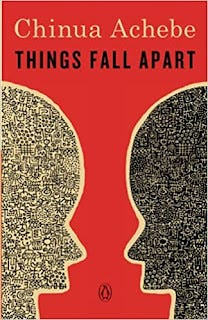
50 pages later and I was wondering why I was still reading. Plot-wise, not much seemed to be going on. 147 pages in and still, not too much terrific build up or plot action has happened. It seems like Achebe dedicates pages and pages to mundane details about the Igbo traditions and then kills off an important character or banishes the main character from his village in practically a page.
In essence: Achebe literally writes the book in the custom of the Igbo tribe. He invites the reader in as a guest, cracks a Kola nut, draws with some chalk and bids you to lay your goatskin to sit down, and then proceeds to talk about everything but the point for hours. And then when he decides to get to the point, the conversation finishes in a quick minute.
Still, I was (and am) determined to finish the book...
I'm so used to the fast-paced plot twists and flips of modern sci-fi and mysteries that the slow, traditions of the Igbo reading were going past me. But in the details lies a rich thrill in and of itself, for it's a door to a culture that is so dissimilar to my own. To that end, I started reading it more like a history book rather than a thrilling literature. With the mindset of understanding the customs and lifestyle of a tribal African culture and then observing their eventual collapse to the pressures of Europe/Christianity/slavery, the read is far more interesting.
Favorite Quote: "A man who calls his kinsmen to a feast does not do so to save them from starving. They all have food in their own homes. When we gather in the moonlit village ground it is not because of the moon. Every man can see it in his compound. We come together because it is good for kinsmen to do so."
---
I also watched Jai Bhim (2021), an Indian-Tamil movie dubbed in Telugu. It's based on a true story:
A pregnant woman from a primitive tribal community, searches desperately for her husband, who is missing from police custody. A High Court advocate rises in support to find her husband and seek justice for them.
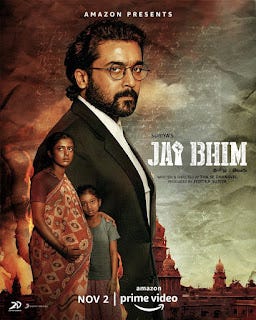
Some messy notes:
The husband was beaten and tortured by the police for a crime which he did not commit.
As a member of a tribal community, he was barely recognized as a human being
A good conscience and regard for the law can be reminded through the power of narratives
Democracy may be no less corrupt than communism -- special interests groups, authoritarian police-states, loss of rights to corruption; bureaucracy; disregard for social consequences of immoral incentives; and more are to blame
Had me left in admiration of social justice movements, but also questioning the net impact... if the focus was alternatively on getting as many people out of poverty through technological breakthroughs and leapfrogging, would that not be an even stronger way to prevent such brutality? This is mainly even a valid question because the police were so brutal because those they fought against had no means of getting any in their numbers in trouble or suspended through ordinary channels... it was only through the help of a lawyer who fought for human-rights causes that this case even reached the courts.
Jai Bhim, like Things Fall Apart, is also largely set among tribal peoples. There is a stark contrast between how the director/author of each respective piece went about showing the tribal setting and then introducing plot changes.