
Theory of Shadows by Paolo Maurensig

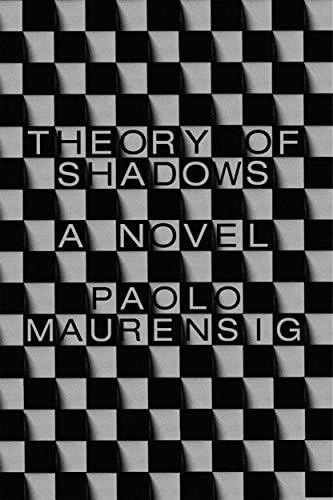
I picked up up Theory of Shadows in the used book section of Strand Bookstore in East Village. A friend and I spent the day combing through bookstores across Manhattan -- something I'd like to do more often, perhaps in Philly too. Anyway, upon reading the synopsis in the back and seeing "chess" and "genocide," I thought the book would be interesting enough.
Theory of Shadows takes the reader through a fictional account of what World Chess Champion Alexander Alekhine's final days may have been like (written as though it was through his own eyes).
The book does so in a way "that which only a novel can discover." Maurensig writes an account in his own voice at the beginning and the end while he is looking for details around Alekhine's death in Estoril, Portugal. Theory of Shadows is a great example of blending journalistic endeavors with creative inspiration.
Quotes:
"The common man, however, tends to gloss over the sublime qualities of an artist, and judges the individual based on the image, often distorted, that the media present him with. The press continued to describe Alekhine as a monster, a drunkard, a fortune hunter, a traitor to his own country, a friend of one the most heinous Nazi criminals... And when has the artist ever concerned himself about his benefactor's political choices?"
"He walked over to the window to look at the vase in full light. For him, it represented the only real possibility of salvation. But the moment always comes, he thought, when all our illusions fail, and with them every amulet that might protect us, that might still prove auspicious: talismans, formulas, prayers, sacred images... all of them. Death must be faced by ridding yourself of all this panoply: going without weapons, without shields or armor. Approaching death as naked as you were at birth."
"I believe that art has the power to make us forget everything, to turn us away from affections, from obligations, to make us exceed ingly egoistic, obliterating any trace of love in us." He rubbed his fore-head. "I wonder, Neumann continued, "if talent is a gift or a curse. I wonder why we have not been granted the prospect of reconciling art with life, why the two paths diverge to such an extent. But it is art and not life that fulfills our deepest desires. And we succumb to its lure. That is why, at times, I fear that there will be no redemption for us."
The mental steps of handling bad PR:
Deny, always deny, even in the face of the most glaring evidence.
Pretend not to understand the gravity of the accusation. Consent from time to time to some admission of venial facts.
Answer a question with a question.
Continue to deny everything, but let a partial truth reinforce the lie.
Assume an attitude of naïve innocence.
React to the accusations with righteous indignation.
"It was during his first colossal drinking spree, while on leave with the cadets, that he had learned of his ability to hold his liquor better than his comrades, and he had been quite proud of this. While some struggled to stay on their feet, he could still walk a straight line, and when others burst into bawdy songs, he maintained a composure and a lucidity that gave him a new sense of omnipotence."
Some words I didn't know that I'll probably forget soon enough:
crocuses
goauche
vermouth
panoply
bombastic panegyric
forma mentis
peroration
abnegation
patzers
putrefaction