
The Candy House by Jennifer Egan

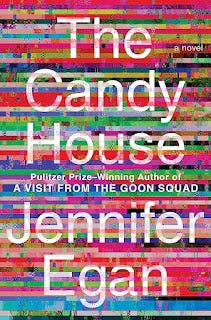
I picked up The Candy House on a bookstore with a small cafe attachment in the Upper West Side (near 72nd street). I was waiting for a friend and decided to explore through some books. I noticed on the first few pages that the main character of the first short story, Bix Bouton, went to Penn. Coincidences... so I decided to buy the book and the rest was history.
Work has been brutal with the hours, so it took me the last 9 weeks to finish a ~330 page book. I realized that reading on the subway is a blessing and a vibe on its own. I'll hold those moments dear. I think with fiction, I have to be engrossed and cannot do short 5-10 minute bursts, because then I'll never finish the book.
The Candy House is like black mirror in a book. It revolves around a future technology which blurs the line of privacy by allowing everyone to peer into your consciousness. If you would like to see what any particular person saw or felt in a moment, you would only have to trade your own experiences. Everyone became a part of the collective, except a few oddball cases that didn't. Talk about a technology which usurps social media.
All of the short stories had something in them that left me thinking. Some of my favorite:
Alfred Hollander's need for authenticity and hate for phonies
Have you never wanted to scream inside a bus of people, just to see their authentic horrified reactions?
Miles Hollander's perfectionism, drug use, and then eventual renewal
Your title and positions are always leased. The only thing you truly own is your character. One thought I had today was the suddenness that all of everything I care about can disappear. My job and title and fancy Uber’s and credit cards. A car accident paralyzes me. Cancer kicks in. A relationship may not work. A best friend may pass. A (future) child could be taken away. All these things could happen, and all at once too. There is no such thing as rock bottom until you’re dead. What are you left with? Can you survive? All these things would be shattering and all in their own distinct painful way. These thoughts became meditative after reading a section of Candy House by Jennifer Egan and talking with a friend from my intern class. After letting these thoughts sit, I had the calmest day in a while. It brought a sense of extreme gratitude. Approaching life with a sense of belonging, ease, and stoicism. We lease our title and our time. It all expires eventually. We own our character and our approach to each and every day and situation.
Miranda Kline's independence in life yet loving connection for her daughters. Her daughters' connection to their father, Lou, and path dependence.
Bix disguising as a college student in Columbia to recreate the type of intellectual discussions he once had in college, which are now hard to have in his adult life given his position and age
Lulu the spy
2nd person narration was gripping. I felt a cold detachment, yet a strong empathy for Lulu's character. As if
Emails from Lulu
What a beautiful way to create dialogue. Emails are exquisitely personal to each character and show the nature of online interactions and "networking."
Core themes:
Interconnection between characters. The concept of the collective (whole) and the individual. A connection that is inherently there despite whether we choose to directly share our private life or not.
Seeking authenticity
Masks / disguises characters put own to become different versions of a "self"
Perspectives of seeing characters from the eyes of other characters
How does the concept of "privacy" promote or take away from authenticity?
How does the nature of connectedness relate to an artificial connection to our fellow humans, whether via modern social media or a technology like Own Your Unconscious
How does the nature of every human being alone but interconnected make us feel at different stages in our life and how can we best deal with that inevitability
How can we gracefully enter different stages and styles in life while retaining what made "you" you
How did Egan's distinct writing styles and personality types affect your experience reading the book