
Happiness Lessons from Arthur Brooks (HBS)


Arthur Brooks came to speak at the Collegium at Penn, which is the overarching organization of this Philosophy of Finance seminar I've recently been involved in. I went in as Dr. Sourish Jasti (name tag) along with my friends Ben and Isaac.
This is a transcription of my notes. Don't take this to be facts and think through it yourself. It may be hard to distinguish between my thoughts and Brooks'.
In American culture (or maybe Wharton more specifically), there is an eagle-eye focus on success. Money is an easy way to measure this and so is status, which is usually measured by what people do. Thus a common intro question becomes "What do you do?" Arthur Brooks' wife is from Spain, so instead she asks people "Where are you going for vacation." Typical European fashion. Often I find peoples' professional lives the most interesting thing about them... but I find it silly to always lead with this. If you had a chance of meeting one of your future best friends for life, maybe someone who would in 20 years be your best man, at a random event, would you really want to remember the conversation starting off with "What do you do?" and not something more excitable Real friends > deal friends, even though real friends can be deal friends too. Sometimes you do business with friends as a pre-text to keep in touch and spend more time together. Love it.
Humans have four main wants.
Money
Power
Pleasure
Prestige/Fame/Honor
Do your best to understand which affect you the most. For Arthur Brooks, it's #4. For me, it feels like all four though I'm getting better at giving up outright pleasure.
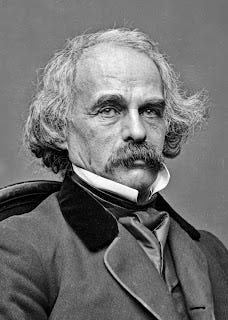
Nathaniel Hawthorne was known for writing these concise pithy sayings. He had two solid ones on happiness.
"Happiness is a butterfly, which when pursued, is always just beyond your grasp, but which, if you will sit down quietly, may alight upon you."
"Happiness in this world, when it comes, comes incidentally. Make it the object of pursuit, and it leads us a wild-goose chase, and is never attained. Follow some other object, and very possibly we may find that we have caught happiness without dreaming of it."
These quotes certainly have the right general idea; however, many people define happiness as a feeling and that may be mislabeling it. The feeling is the residue of happiness... the evidence that it was there.
There are three main aspects to happiness.
Happiness = Enjoyment + Satisfaction + Purpose
Enjoyment - pleasure + higher consciousness.
Satisfaction - homeostasis + the hedonic treadmill.
Purpose - why am I alive and what will I die for?
Enjoyment:
Pleasure/emotionality is from the limbic system. Actively being conscious about things is from your pre-frontal cortex. You might tell your children "don't be so limbic," which insinuates "use your words." Manage your feelings so your feelings don't manage you. Expressing feelings and identifying them is what makes journaling and certain types of therapy so useful. Pleasure alone doesn't lead to enjoyment. You need to actively experience and be meta-cognitive. Enjoyment is based on love, relationships, and memories.
Satisfaction:
Getting satisfaction is easy, the problem is that you can't keep no satisfaction. Homeostasis works its way into our mentality by making new things feel old. Whether it be traveling, stress levels, the gym or anything else where you push yourself to new areas, your body and mentality will return back to a state of inherent equilibrium. The man who skydives 25 times in two weeks will definitely lose the thrill.
Most people run the hedonic treadmill without a purpose. They were raised like that and so a lot of it is out of fear. If I stop now, I'm going to lose the traction and trajectory of my life. I see this a lot, especially with people in business. People don't go to Wharton or HBS to walk at a leisurely pace after all. Running on the hedonic treadmill is fine and chasing success is vitally important, but you should know why (see next section, Purpose) and you should know what you're shooting for.
Satisfaction = Haves / Wants
Let's play with math principles... keep one variable constant and see how it affects the other. You can increase satisfaction by having more relative to your wants or wanting less relative to your haves. Want less and have more is the key. If left unchecked by a strong mentality you can't keep up with the denominator and the wants will quickly exponentially increase.
"We need to learn how to want what we have NOT to have what we want in order to get steady and stable Happiness" - Dalai Lama XIV
Therefore, we need to have a wants management strategy.
Purpose:
Many people ask the ever so profound question What's the meaning of life? 42, idiot. A way better question is What's the meaning of meaning? You can answer that and say you have purpose when you can answer two other questions: why am I alive and what will I die for? I'm not too sure about either. Feels strange to be playing the game just for the thrill of it. Very NPC behavior. The only thing I know I'd die for is my future unborn child. But that's abstract and seems very far away. I think Arham once said he'd be willing to die for banning floating currency exchange rates or something like that.
A lot of people really don't like suffering. Instead of trying to get satisfaction, they'll try to block off suffering. When you do the work to eliminate suffering, you incidentally eliminate happiness.
Purpose can be broken down into three main components
Coherence - things happen for a reason
Purpose - I'm alive in order to do something
Significance
Brooks was using a food analogy during his talk. He talked about happiness like macronutrients and made the parallel that you had to know your bodies metabolism to understand the diet you need to be in the best shape.
Genes (~50%) + Circumstance (~25%) + Habits (~25%) = Happiness
When you know your genetic profile, you can know what to do. Some people's equilibrium is naturally different and there's not too much you can do about that, but the information is important to help shape the other two parts of the equation. Circumstances, such as the amount of status or money you have, can bring you up or down by ~25% but it won't last because of homeostasis. Eventually it all becomes normalized, so don't direct your focus to them and take circumstances as they comes.
A happiness 401(k) plan: a portfolio for a meaningful life. There's four main indexes that Brook has identified.
Faith
Family
Friends
Meaningful work - earned success + serving others
Family is ties that bind that don't break. who will be there for a 2 am call when shit hits the fan. don't need to like them but you'll still love them because that's how you're wired.
The biggest epidemic in America is loneliness. The average person barely has 3 people they would call real friends. Look for real friends not just deal friends. In business school, we make a lot of deal friends and I think it's important to not only recognize the difference but actively be vulnerable enough with people to not just be perceived for the deals and future value you can bring. As Brooks said, real friends are useless (not worthless)... you need no pretense to talk to them.
Earned success is when accomplishment and hard work are rewarded. Serving others means your work makes life better for others in a tangible way. After all, to be needed is true human dignity.
On the topic of whether government should help people be happier, Brooks said that government should get out of the way and not try to induce happiness. Policy should only remove sources of unhappiness.

Me, Ben, & Isaac right before we were about to meet the head of the Federal Reserve Bank of Philadelphia.
Spoilers: we didn't wait long enough.