
Failure (The Engines of Cognition)

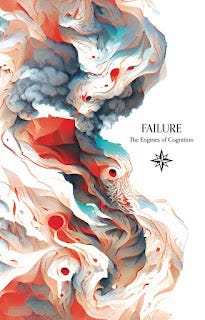
Failure is the 4th and final book in The Engines of Cognition, a set of 59 essays written by the LessWrong community. I've been reading the series out of order (accidentally went from the first to the last), so up next is Modularity and then Incentives.]
What do you think of when you hear the word "failure." Your thoughts on the question are truly a reflection of who you are and what you value. As defined by LW, "it's what happens when a system behaves differently from how we expected it to.... [and] is often as much about misunderstanding how a system works, as it is about the lack of effort or plan to bring the system into a successful configuration." Seeing that this is a book written by AI/ML researchers and rationalists, their definition of failure takes a systems-level view. I can appreciate that.
My favorite essays from the book are:
The Parable of Predict-O-Matic
Failure in technology that can manipulate people. A prediction market is an assassination market. It's terribly aligned.
Blackmail
Failures of blackmail as a principle that puts destructive actions on the table. A reasonable consequentialist argument against blackmail.
Bioinfohazards
Risks in information sharing and idea inoculation as it relates to biohazards.
The Curse of the Counterfactual
A failure of our brains in comparing our past, present, and future to counterfactual imaginations from which it then punishes the self for the difference between reality and our perceived reality. A really subtle but important curse that afflicts people.
Rest Days vs Zombie Days
A way to fight burnout by distinguishing through properly done rest days.
My views on Failure
I've been moved to consider failure not as an event in time, but generally as the misconfiguration in a process or system. Events which we commonly perceive as failures (i.e: teenage pregnancy, cheating on a partner, gang violence, stealing) are usually not the result of single choices. There's a multitude of factors that work to shape the choices we make and a single point of failure in a system can lead to multiple bad outcomes. Trying to treat the individual symptoms usually doesn't cure the underlying disease.
Next list of books:
Modularity, and Incentives from LessWrong
Galapagos by Kurt Vonnegut
Warren Buffett's Ground Rules by Jeremy Miller