
Drug Wars: How Big Pharma Raises Prices and Keeps Generics off the Market by Robin Feldman

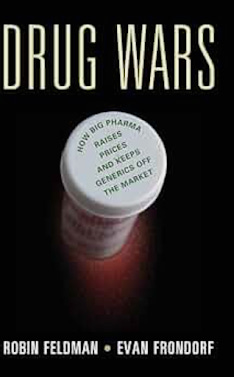
Most of this summary is with exactly the author's own words. I have not simplified ruthlessly, so this outline is inevitably longer than I would like -- 25 pages by what Google Docs counts. I am using this for my own research project, so I suggest to skim to sections that pique your interest (if anybody does actually read this).
Overarching thesis:
Many pharmaceutical firms may no longer compete solely on the basis of innovation, but rather on their ability to manipulate policy mechanisms and pathways to extend monopoly and duopoly terms. The book focuses on the schemes, strategies, and tactics – not competition, not R&D – that pharmaceutical companies use to keep prices high and generic drugs off the market. We cannot expect the rats in the maze to run in the direction society wishes if the cheese is located at the other end. And, as the generic system in the United States currently operates, the cheese is poorly located.
Under the old approach to cancer treatment, physicians would attack a tumor by trying to reduce its size or deny substances that seemed to be feeding it. Modern medical research has suggested, however, that cancer treatment can be far more effective when using a systems approach. Specifically, tumors seem to operate in a networked or systems fashion. Cutting off one approach may simply lead the tumor to develop work-around approaches, and the new approaches may be even more dangerous and damaging than the original pathway. Thus, attacking the problem by trying to mitigate it when it emerges may be as outdated an approach for the patenting and approval of medicines as it is for treatments in which those medicines will be involved
Prologue: Big Scandals, Higher Prices
Martin Shrekli and Turing Pharmaceuticals
Became the subject of intense scrutiny after raising the price of a drug by almost 5,500 percent overnight. Turing had bought the rights to Daraprim, an antimalarial drug also used for treatment of infections common in HIV-positive patients, for $55 million. The company then immediately raised the price of the drug from $13.50 a tablet to $750 a tablet. A one-month course of the drug became $20,000, up from just $400 before the increase. The magnitude of the price increase for a potentially lifesaving drug led to immediate public outrage, particularly because the drug was originally approved in 1953 and had been off-patent for decades.
How?
When Turing acquired the rights to Daraprim, it maintained a restricted distribution system originally put in place by Impax, the previous owner. In fact, Turing requested that a restricted distribution system be established before the sale occurred.
Impax (and later, Turing) instituted its restricted distribution system without the FDA and for no apparent safety reason at all, making the drug only available through Walgreen’s Specialty Pharmacy. Along with creating access problems for hospitals, the move in part may have been designed to make it difficult for generics to gain access to the samples needed to gain approval for a generic version of the drug
Every time a drug goes generic, I grieve. Let us not mourn the dearly departed, instead celebrate the profits and new assets it has brought us. – @MartinShkreli, April 10, 2012, 7:46 A.M.
"generic intrusion"
Big Pharma profits mainly from rise in prices, not innovative R&D
Between 2010 and 2014, U.S. prices for the thirty best-selling drugs rose four times faster than prescription volume, and eight times faster than inflation.
80 percent of the growth in profits of the twenty largest drug companies in 2015 resulted from price increases.
Customers of CVS Health spent 12.7 percent more on drugs in 2015 than in the previous year, and more than 80 percent of that additional spending was the result of price increases.
Why would prices of existing drugs, some of which have been available for decades, increase when constantly improving medical care would suggest that their relative value should decrease or remain stagnant? The routine price bumps suggest that pharmaceutical companies are taking advantage of price inelasticity and minimal competition to push pricing to its limit.
R&D activity, however, is expensive and difficult – mergers, acquisitions, and obstruction are cheaper and simpler. As a result, it has become far too easy to spend time and resources exhausting legal and regulatory options, pushing the patent cliff as far away as possible.
Value-based pricing model is legit, but often argument is overused
New treatments have immense value in improving quality of life, extending life spans, and eliminating the need for invasive medical procedures to be used instead. The hefty price for some of these pharmaceuticals reflects the value they offer to patients.
Retrophin and "Thiola Total Care"
Increased the price of the drug 2000 percent from $1.50 to $30 a pill, but it also created a still-active closed distribution system known as “Thiola Total Care.” This system requires a patient and the patient’s doctor to fax enrollment forms to Retrophin, which then manages direct shipments not through an online system but only over the phone. Notably, although it may be a technical error, the enrollment form on the Total Care Hub Web site automatically fills in the bubble for “dispense as written,” which would prevent a pharmacist from substituting a generic form of the drug for Thiola.
Lack of generic competition can force patients to make a decision between refilling prescriptions and making rent
The Strange Economics of Pharmaceuticals
Misguided principal-agent models define every aspect of the value-chain
Players: patient, doctor, pharmacist, insurance, PBM, federal government
Patient-doctor relationship
The doctor has little incentive to keep costs low, especially when the doctor’s primary criterion behind a medication choice is efficacy
Doctor-Pharma salesman relationship
[For the doctor] some of their own agency regarding prescribing decisions is restricted by the stream of information they receive from drug manufacturers
Patient-Pharmacist relationship
Pharmacists facilitate medication dispensing, limited by generic substitution laws. Often, doctors prescribe brand names, assuming generic substitution if available. Patients' co-pay varies based on insurance; uninsured pay the list price, often facing higher costs.
Patient-Insurance
Insurer is the principal – given that the insurer pays much of the cost
Insurers will often institute differential co-pays for their policyholders depending on the type of drug that is prescribed
However, patients can work directly with pharmaceutical companies to change what they pay while still pushing the bulk of the cost onto the insurer
Insurance-PBM (pharmaceutical benefit managers) relationship
PBMs manage drug purchases and influence drug formulary positions based on agreements with pharmaceutical companies. Insurers and PBMs might not cover certain drugs, favoring cheaper alternatives.
Specialty Pharmacies restrict prescriptions to certain pharmacies, limiting generic substitution and insurer influence.
PBM discounts and deals are so prevalent that few insurers actually pay the “list” price for a drug.
Patient-Pharmaceutical Manufacturer
Many pharmaceutical companies provide co-pay “coupons” or “rebates” directly to patients. These incentives discount the patient’s out-of-pocket costs for drugs at the point of sale, perhaps influencing the patient to purchase expensive drugs while shifting all cost (and risk) onto insurers
D2C advertising
The United States and New Zealand are the only two countries in the world that permit direct-to-consumer advertising, and this advertising has been shown to increase the number of patient requests or inquiries about specific drugs dramatically.
Federal govt
Federal health insurance (including Medicare, Medicaid, and veterans’ benefits) users are ineligible for coupon benefits under antikickback laws
Federal government is barred by federal law from directly negotiating drug prices with pharmaceutical companies in key program
US is both the world’s largest pharma producer, at 39 percent of global production, and the world’s largest purchaser, at 45 percent of global sales
One could argue that by serving as the main profit source for pharmaceutical companies, the US is simply subsidizing lower prices in other countries
No one really knows what a drug will cost for any given person
Even after factoring in average discounts of 37 percent in 2015 for the drugs studied, list prices still increased anywhere from 22 percent to a whopping 442 percent from 2009 to 2015
This completely decoupled chain of pricing information and responsibility eventually leads to higher premiums, low price sensitivity, and an opportunity for pharmaceutical companies to take advantage of the complexity by raising prices for everyone
UK National Health Service model
The country’s only drug buyer and establishes what drugs it will make available to its citizenry, encouraging companies to cut costs
President Trump scrapped the entire Trans-Pacific Partnership, as part of an effort to move away from free trade policies
A mix of dysfunctional market dynamics, strong intellectual property protection, and regulation --> complicated expensive situation we have in the US
Generics: A Brief Primer
Automatic substitution laws (aka state “drug product selection” (DPS) laws), exist in all fifty states.
In some states, automatic substitution is required when the generic equivalent is available.
Patient’s incentives are also usually aligned with those of insurers and others involved in the payment process, who wish to pay less whenever possible and thus heavily promote the use of generics in their own lists of covered drugs. When generic substitution works, it works well, and generally to the benefit of patients.
Price changes
6 month launch (180 day): 20% discount from branded meds
Steady-state (181st day and beyond): 80 to 85% discount
Hatch Waxman sped up process to get approval by not requiring clinical trials, just bioequivalence.
Brand-name drugs could face no competition for years after patent expiration. Further, few generics were entering the market to begin with. The burden of the application process, which required the generic to complete its own clinical trials, and the lack of substantial profits, deterred most manufacturers
Paragraph IV certification
alleges that the listed patent either (1) is invalid or (2) would not be infringed by the generic drug application
A generic manufacturer can attempt to enter the market before the brand-name company’s patent term(s) have expired
This is considered an artificial act of infringement and it generally triggers litigation over patent validity. While the generic applicant has not done anything “wrong” in this case, the act of filing the application allows a brand-name company to sue and bring the dispute to a quick close. This also allows the generic applicant to face less risk in the process, since it has not actually infringed any patent and would not be liable for any damages if the patent were found valid. It is like being able to ask a court whether something would be illegal – that is, launching a generic in the face of existing patents – before actually doing so.
As a reward for facing the costs and risks of litigation, the first generic manufacturer to file a Paragraph IV certification and gain approval generally is entitled to 180 days (roughly six months) of market exclusivity alongside the brand-name drug (could be worth hundreds of millions) This benefit is intended to give generic companies an incentive to challenge weak patents or patents that should not actually cover the drug at issue
Congress’s goal: balance adequate patent protection for original inventors + promote the rapid introduction of generics once this patent protection has expired.
When pharmaceutical companies preserve their hard-earned patent exclusivity by legally knocking down generic challenges, such behavior is consistent with societal goals and important for the patent system. Rights are worth little if the rights holder cannot enforce them, and that is as true for patents as for any form of legal right.
Generation 1.0: pay-for-delay / reverse-payment settlements
Involves a brand paying a generic maker to delay market entry
Reverse payment: Generics paid by brands to end a patent-infringement lawsuit
Supreme Court’s 2013 ruling in FTC v. Actavis opened the door to intense antitrust scrutiny of such agreements.
Generation 2.0: side deals + boy-scout clauses
Patterns of multiple side deals, where two companies settle a number of Hatch–Waxman disputes at once, resulting in a net benefit for the generic firm but without any large, conspicuous payment.
Other instruments include overvalued agreements wherein the generic delays entry, but it is paid handsomely to promote, manufacture, or otherwise assist the brand-name company with the sale of its drug.
“Boy scout clauses” – agreements to behave honorably that actually mask anticompetitive collusion.
Generation 3.0: administrative processes and drug modifications to obstruct generics
Drug labeling changes + using FDA safety requirements as a guise to restrict generic access + extending a drug’s life through minor dosage and formula changes + “multiplicity tactics" (a number of these mechanisms are exploited at once)
“Generations” should be thought of as marking the evolution of delay strategies and grouping them in helpful organization.
Introduction: The Winding Road to Generic Entry
Before 1962, FDA drug approval requirements were incredibly lax by modern standards – drugs could simply be sold 60 days after information was filed with the FDA, as long as the FDA did not object
This process changed as a result of the thalidomide crisis in Europe in 1961, when thousands of babies were born with partially formed limbs and other severe birth defects after mothers were given the drug for nausea during pregnancy.
--> Kefauver-Harris Amendments, which, among other changes, required manufacturers to prove the safety and efficacy of a drug before marketing approval could take place.
The Hatch-Waxman Act (The Drug Price Competition and Patent Term Restoration Act)
Allows the activity necessary to prepare a generic drug application to take place prior to the expiration of the patent on the original drug
"Market exclusivity" for branded pharma
Drugs with an active ingredient never before approved by the FDA are eligible for either four or five years of what is known as a “marketing exclusivity.” This is not an extension of the patent term – it only means that the FDA is not allowed to accept generic applications that use the original drug maker’s data for at least four years after initial FDA approval
Requires that the company list all patents that “could reasonably be asserted” against a generic applicant.
Recorded in the "Orange Book" (Approved Drug Products with Therapeutic Equivalence Evaluations.”) which is an outdated method of storing information
It's not even subject to FDA verification
Paragraph IV 6 month exclusivity period can easily be worth hundreds of millions of dollars to a generic, representing a substantial majority of the potential profits to be gained from generic entry.
The battle is now more likely to be Part of Goliath vs. Part of Goliath, with fewer actual Davids on the scene.
Chapter 1: "Generation 1.0": The Rise and Fall of Traditional Pay-for-Delay
The Basic Contours of Pay-for-Delay
Pay-for-delay, a brand-name company settles its lawsuit with the generic company, usually patent infringement litigation... generic receives a cash payment and agrees to delay its entry into the market for a specified period.
Reverse payment schemes, a reference to the fact that payment is transferred from the suing brand-name drug company to the defending generic competitor. This runs counter to the standard expectation that a defendant would pay a plaintiff to settle a suit.
Generic & brand companies are aligned together... but not with society’s interests.
The 6 month exclusivity was designed for the benefit of society but operates here for the benefit of the companies alone. Instead of getting generic drugs to market as quickly as possible, society gets delays.
FTC estimates reverse payment settlements cost consumers $3.5 billion each year.
Alignment of incentives problem
The actual entry date does not matter as much to the generic as does securing the entirety of the six-month marketing exclusivity period. If annual sales are unlikely to fall sharply before the expiration of the patent term, selling the generic a few years later is unlikely to dramatically change the sales the first generic will garner during the six months of duopoly.
If a generic does not need to win its Paragraph IV challenge to hold on to the first-filer exclusivity period, and if a settlement does not lead to forfeiture of the exclusivity period, the generic might be willing to enter into a pay-for-delay agreement and guarantee its exclusivity
Pay-for-Delay as a Bottleneck to Entry
In a situation where a generic has agreed to delay entry, why would another generic filer not try to swoop in and enter the market?
--> Only the first generic filer making a Paragraph IV certification on a drug is eligible for the six months of exclusivity. Even if the certification is withdrawn or the generic filer loses its infringement case, the six months of exclusivity are not available to any subsequent filer.
Thus, the first filer theoretically can create an absolute bottleneck by never starting the clock on its six months. In its early 2002 report on pay-for-delay, the FTC referred to this as “parking” the exclusivity period.
Two Federal Circuit cases in 1998... ruled that generics could still enjoy its exclusivity without winning a challenge.
"Forfeiture provisions": exclusivity can supposedly be forfeited in certain circumstances
If commercial marketing does not take place (1) within 75 days of the drug receiving final approval, or (2) within 75 days of the generic manufacturer either winning a case or entering into a settlement finding the brand-name patents to be invalid or not infringed.
forfeiture from a “failure-to-market” event occurs only when the later of two conditions is satisfied: (1) 75 days have passed since the first generic application is approved or 30 months have passed since the generic application was submitted and (2) 75 days have passed since a final court determination that the patents in question are invalid or not infringed.
Generics and brand-name companies can craft their settlements so as not to assign a determination of blame or reach a judgment on patent validity. Thus, one leg of the provision never occurs and the generic can settle without forfeiting anything.
Is Pay-for-Delay Actually Wrong? Pharma Heads to the Supreme Court
The opposing argument frames a pay-for-delay agreement as follows:
Given the uncertain nature of success in the lawsuit brought on by a Paragraph IV certification, the two parties calculate what they believe their relative position is in the litigation and then settle on the basis of what they believe to be the expected value of bringing the litigation to its conclusion.
Consider a very simplified example – if a generic thinks it only has a 25 percent chance of succeeding in its lawsuit, perhaps it should settle so that it does not enter until the last 25 percent of the remaining patent term. Some argue further that such settlements are even procompetitive, because, in many cases, the generic is allowed to enter the market before the last relevant patent expires. A settlement that allows “early entry” is better than nothing, right? As a result of the settlement, the public will enjoy lower prices sooner than they would have had the Paragraph IV challenge never taken place – a result that would seemingly be consistent with the goals of Hatch-Waxman.
2 flaws in the argument
(1) the “procompetitive” argument about pay-for-delay lawsuits ignores the fact that Paragraph IV litigation specifically questions the validity and applicability of the patent. If the patent is invalid or inapplicable to the drug, the brand-name company should have no exclusionary power. In other words, there is no such thing as procompetitive “early entry” if the patent should not exist at all.
FTC study: 73% win rate for generics challenging validity or application of patent. never assume that just because a company holds a patent that the patent is either valid or validly applied
(2) Even if a patent is valid, it is not a license to engage in any and all activity, no matter how anticompetitive. With any party that holds a legitimate monopoly position in the market, the antitrust laws place limits on what one can do with that monopoly power. In this context, the Supreme Court uses a variety of standard antitrust measures when judging whether a patent holder’s behavior violates antitrust law.
In these cases it's not Generic vs. Brand... it's Government agencies (FTC, New York attorney general) or insurers who argue that the settlement led to inappropriately higher prices and caused harm to businesses and consumers.
FTC vs. Actavis
Supreme Court reversed the Eleventh Circuit and ruled that the FTC’s case against a brand-name firm should not have been dismissed, further adding that pay-for-delay settlements are open to antitrust scrutiny.
The Court declined to hold that reverse payment settlements are presumptively unlawful, however, preferring instead a rule of reason test to decide whether an antitrust violation has taken place.
A critical insight undergirding Actavis is that patents are in a sense probabilistic, rather than ironclad: they grant their holders a potential but not certain right to exclude.
Congress has elected not to make the issuance of a patent conclusive but, rather, subject to validation or invalidation in court proceedings.
the California Supreme Court implemented a “structured rule of reason” test for scrutiny of reverse payment settlements, one falling somewhere between the notion that such settlements are per se illegal and the amorphous rule of reason.
2015, Teva agreed to pay $512 million to settle a class action brought by purchasers of the company’s drug Provigil, a widely used narcolepsy drug. --> largest ever settlement for direct pay-for-delay... BUT
Even considering the FTC’s lower-end estimate of $3.5 billion in profit from the delay rather than the executive’s $4 billion comment, the company was still left with at least $2 billion after settling with the class action plaintiffs and the FTC.
Chapter 2: "Generation 2.0": Complicating Pay-for-Delay
Already Steps Ahead of ACTAVIS
K-Dur settlement between Schering-Plough and Upsher Smith (1997)
In 1995, Upsher-Smith became the first generic to file a Paragraph IV generic application for K-Dur
Hours before the trial, Schering agreed to buy licenses to sell multiple Upsher medications – in particular, a cholesterol drug known as Niacor-SR, which Upsher had developed. Schering paid Upsher $60 million and agreed to pay royalties on Niacor-SR, depending on its sales of the product. Before the settlement was even ratified, the two parties quickly abandoned their plans to make Niacor-SR, but suspiciously left the $60 million “license” payment intact. (No refunds, it seems.)
Court of Appeals for the Third Circuit ruled it was a reverse payment.
A “quick look rule of reason” test, “based on the economic realities of the reverse payment settlement rather than the labels applied by the settling parties,” should be applied to these settlements.
Side deals... services include:
1) Promises to promote or market other drugs (the “copromote deal” seen in Actavis)
2) Licensing deals as in K-Dur that allow the brand-name drug company or the generic to manufacture the other party’s drug
3) “Authorized generic” agreements permitting the generic to manufacture and/or sell the brand-name formulation as a generic without filing for generic approval, with profit-sharing or royalty deals attached
4) Agreements to share R&D duties on a future project
5) Deals to supply the brand-name company with raw materials for manufacturing; and more
--> the brand-name company “overpays” the generic for the services the generic supposedly furnishes to the brand – with the difference between the market value and the actual payment constituting the cash consideration for the delay.
In the alternative, the generic may “underpay” for something of value it receives from the brand-name drug company, such as the right to make or sell other pharmaceuticals from the brand-name drug company’s portfolio.
Generic-brand relationships are rarely, if ever, found outside the context of a settlement
Ex: a generic company generally does little marketing and advertising, instead relying on the fact that pharmacists will automatically substitute a generic drug when filling a prescription listing the brand-name drug. --> that's how generics can offer lower prices to begin with
Provogil settlement between Teva and Ranbaxy
The brand-name company was essentially agreeing to pay higher prices by allowing the generic company to stand in as the middleman. According to the FTC, a senior manager at the brandname company called the supply deals – which were struck with multiple generics – a “supply chain disaster.”
However, Ranbaxy did not even produce the active ingredient and was instead sourcing it from a third-party manufacturer.
IN RE LIPITOR: Everything but the Kitchen Sink
In a class action complaint (re Lipitor), end payors alleged that this settlement represented an unlawful reverse payment. Their argument was as follows: Pfizer knew it was unlikely to win its remaining attempts to stop the launch of generic Lipitor – its hopes were hanging on an application for a patent to be reissued and a petition it had filed with the FDA. However, Pfizer had a very strong case against Ranbaxy regarding another drug, Accupril, a treatment for hypertension. In fact, it was widely believed that the suit over Accupril could have easily been worth hundreds of millions of dollars in damages because Ranbaxy had already entered the market before a final determination was made in the Hatch-Waxman litigation. At-risk launches sometimes occur when a generic is confident it will prevail in litigation. Ranbaxy’s case looked unfavorable at this point, however, given that another generic had already lost its case regarding Accupril patents. Despite the apparent strength of Pfizer’s position, Pfizer mysteriously asked for only $1 million to settle the Accupril litigation.
Pfizer’s stunning and unexpected act of generosity regarding Accupril was actually a “massive [reverse] payment worth hundreds of millions of dollars to [the generic].”
Pfizer paid for the delay by giving up another case likely to be worth hundreds of millions of dollars.
if Pfizer wanted to get a settlement that included the delay of Lipitor, there had to be a pending Lipitor case to settle in the first place. Thus, Pfizer sued the generic over infringement of two small patents not even listed in the Orange Book for Lipitor – two patents for which a court had already said Pfizer had no standing to assert against the generic.
Given that the patents were not listed in the Orange Book, no infringement real or artificial – could have taken place.
How to measure the value of the damages? --> this is the type of work that Professor Martin Asher (FNCE 101) does
Estimating damages requires a reliable monetary value estimate, as seen in cases where courts dismissed claims without it.
The plaintiff needs to assess the market value of each settlement part, including the value of ending litigation, rights to market generics internationally, and resolutions of other related litigations.
Then, it's necessary to determine how much the generic company "paid" for these settlement elements.
The plaintiff must prove that any difference between the market and actual value of the settlement signifies a reverse payment from the brand to the generic to delay market entry.
Pfizer Lipitor delay valued >$1.5B
The Post-ACTAVIS Landscape, Contract Clauses, and KING DRUG
Acceleration clause (aka coordination clause) is like a MFN clause
The generic, which has agreed to delay entry, may immediately speed ahead to enter the market if another generic is able to jump the queue and get into the market before the first filer enters and enjoys its exclusivity period.
After an acceleration clause is put in place, any generic looking for a way onto the market does so with the knowledge that, if they are successful, they will immediately face generic competition from the first filer.
--> In essence, the brand-name firm pays the generic by reducing the risk of competition in exchange for a commitment to delay.
The success of this strategy relies on other manufacturers’ having knowledge that the acceleration clause exists.
--> sometimes clauses are revealed as part of press releases announcing settlements
Ex in Actos case: while the remainder of the three settlements were confidential. Takeda reportedly bestowed upon the generics the ability to tell Teva about the acceleration clauses
Boy scout clauses
The brand-name company promises good behavior but does so in a way that has anticompetitive effects
Authorized generics: allow a brand-name company to hold on to a portion of the profits that would otherwise go to the first generic filer, and it reduces the incentive for entering generics
In 2005, the D.C. Circuit ruled that the six-month exclusivity does not block authorized generics because brand-name approval has already taken place. The exclusivity provision only bars future approvals.
This changes the Hatch-Waxman calculus for a perspective generic: if you win your patent challenge, you will now be entering a market with another generic on the shelves, not just the expensive brand-name drug. Licenses to manufacture authorized generics also tend to appear in “side deals” in Generation 2.0 agreements.
They might have the long-term effect of disincentivizing competition, the short-term effect of increasing competition will actually reduce prices for consumers.
FTC estimated that a generic’s revenue drops between 40% and 52% when facing competition from an authorized generic during the exclusivity period.
FTC 2011 report
Concluded that authorized generics are mostly procompetitive, given that the presence of authorized generics does not seem to deter patent challenges.
Perhaps this is one area where brand-name strategy generally benefits consumers: prices decrease without preventing generics from adding their own competition to the market.
With the threat of authorized generics looming over generics, brand-name generics can entice generics to enter settlements by promising not to launch an authorized generic.
No-authorized-generic agreement
A brand-name firm agrees not to launch a generic form of its drug until the first filer’s six-month exclusivity period has expired. In return, the potential generic manufacturer delays entry. The brand-name company, of course, retains the right to continue selling the more expensive branded version of the drug throughout both the generic delay period and the six months of exclusivity.
the first generic’s revenue will now no longer drop 40-52% becomes the payment for delay.
One silver lining of no-authorized-generic agreements, as other commentators and academics have pointed out, is that they may offer an easier argument to courts that noncash agreements violate antitrust laws.
Jon Leibowitz (former FTC chairman): It used to be that a brand might say to a generic, “if you go away for several years, I’ll give you $200 million.” Now, the brand might say to the generic, “if I launch an AG, you will be penalized $200 million, so why don’t you go away for a few years and I won’t launch an AG.”
King Drug
Arose out of a settlement between GlaxoSmithKline and first generic filer Teva over Glaxo’s brand drug Lamictal, an anticonvulsant drug used to treat epilepsy and bipolar disorder. In the Paragraph IV litigation, the district judge invalidated the primary claim in Glaxo’s patent on Lamictal. One month later, the parties agreed to settle in what was, by that point, a case that the brand-name drug company was likely to lose
No cash was exchanged as part of the settlement. Instead, Glaxo allowed the generic to enter the $50 million market for chewable Lamictal 37 months before the patent expired. Looks good so far. However, the settlement did not permit entry into the far more lucrative $2 billion Lamictal tablet market until one day before the expiration of Glaxo’s patent.
Third Circuit ruled in favor but then First circuit overruled previous cases.. finding that deals with non-cash considerations can violate antitrust laws, and, importantly, walked back other rulings requiring specific calculations of the value of non-cash payments.
Generation 2.0 has featured lucrative side deals and strategic no-cash clauses involving brand-name drug companies and generic.
Chapter 3: "Generation 3.0": New Tactics for Active Obstruction of Generics
A New Generation of Pharmaceutical Delay
Motto: “If you can’t join ’em by securing agreements to delay generic entry, beat ’em."
Citizen petitions
These petitions can require extensive FDA review of the assertions made – and pharmaceutical companies know full well that the FDA is likely to take months (or longer) to review even entirely groundless claims
The most current legislation requires that citizen petitions with the potential to affect generic approval must be considered within 150 days, those approximately five months of delay could be worth hundreds of millions of dollars.
Even though tactics unlikely to be successful, even a rejected or dismissed attempt at obstruction can be worth hundreds of millions of dollars
In re Flonase Antitrust Litigation
Flonase, an extremely popular steroid nasal spray for allergy treatment, reached $1.3 billion a year in sales. Through a complicated series of citizen petitions to the FDA, GlaxoSmithKline was able to stave off generic entry for 23 months. Thus, the delay achieved through citizen petitions was worth approximately $2.5 billion.
In two class action lawsuits that were later filed against Glaxo, the company settled for a total of $185 million... GSK was net $2.3B
Product Hopping and the Purple Pill
Evergreening:
Regain market monopoly by making slight modifications to a drug’s delivery mechanism, dosage, or other characteristics to make the drug eligible for additional exclusivity or patents.
Product hopping
Drug companies attempt to shift the entire market (pharmacists, doctors, and consumers) for their brand-name drug to a new or improved version of the medication as old drug reaches patent cliff
1) Introducing a slightly modified version of a brand-name drug as patents expire, protected by new patents or exclusivities to block generic competition.
2) Launching major advertising campaigns to encourage doctors to prescribe the new drug version.
3) Offering rebates and discounts to insurers for the new drug, often making it more attractive in insurance formularies and reducing patient copays compared to the old version.
4) Directly providing copay discounts to patients for the new drug, shifting higher costs to insurers.
5) Discontinuing the old drug version, buying back inventory, and removing it from insurance formularies and drug databases (First Databank MedKnowledge), hindering generic substitution.
6)When the original drug is excluded from formularies, generic equivalents struggle to compete, as they're often treated as branded drugs for insurance purposes, increasing consumer costs and discouraging generic use.
AstraZeneca Prilosec to Nexium product hop
Switched the market from iPrilosec to Nexium by moving Prilosec from a prescription medication to an over-the-counter drug, and then shifting the prescription market to a newly patented Nexium.
Kaiser Permanente on New York Times in 2004: “Nexium is no more effective than Prilosec,” she said. “I’m surprised anyone has ever written a prescription for Nexium
Nexium received FDA regulatory approval in February 2001 and began sales in March. The timing, however, was too tight. Prilosec’s patents were due to expire in April of that year, and that small, two-month window of time would not be enough to switch the market to Nexium.
Additional 6 months of pediatric exclusivity and then added patents on a widely available coating for the drug. What is pediatric exclusivity? How did they add a patent on a coating if it was widely available?
AstraZeneca carefully crafted a campaign that portrayed Nexium as the successor to Prilosec, giving it the “Purple Pill” moniker that Prilosec once held. “The makers of Prilosec introduce their new purple pill,” a narrator announces in a commercial that aired beginning in early 2001 and featured celebrities such as Jane Lynch. It directed consumers to call for a free trial alongside the classic instruction to contact your doctor about the medication.
Prilosec was eventually switched to an OTC drug
Before the original patent expiration in 2001, Prilosec was the country’s number one selling drug with $6 billion per year in sales. In 2013, 12 years after the evergreened Nexium launched, Nexium was the number two selling drug with just below $6 billion in sales.
New Examples of Product Hopping
Delzicol consists of Asacol tablets surrounded by a purportedly ineffective additional capsule.
Manufacturer, Warner Chilcott, argued that the change was necessary because a slight modification was also made to an inactive coating ingredient that it believed could pose safety concerns. According to a complaint, however, this ingredient remains part of Asacol tablets sold in other countries. Thus, this switch may have merely been subterfuge to display concern with safety, when the real reasoning was to add the patentable but inoperable cellulose capsule and maintain the company’s supracompetitive profits.
Completely removed the original Asacol from the market, sending all patients to different dosage forms of Asacol or to Delzicol.
A legal complaint also alleges the involvement of reverse payments and citizen petitions, offering an example of how “multiplicity tactics” are often involved in generic delay.
Actavis Namenda product hop
Important Alzheimer’s disease treatment --> Court of Appeals for the Second Circuit in spring 2015
Namenda is the only treatment in its class available for Alzheimer’s and the only treatment approved for moderate-to-severe Alzheimer’s. Thus, unlike other cases of product hopping where other drugs might be available as an inexact substitute, switching to Namenda XR was the only choice for Alzheimer’s patients who completely depend on the treatment.
all other Alzheimer’s treatments in different classes had already moved to a once-a-day treatment before the introduction of Namenda XR.
Had Actavis waited to incorporate a known innovation in order to thwart generic entry. Specifically, Actavis failed to introduce the once-a-day form for three years after it was approved by the FDA, timed to less than a year before the patents on original Namenda would expire.
Insurers angle for defense
insurers, especially managed care organizations, have an incentive to effectuate substitution to generics, even after product hopping takes place, to lower their own costs. Thus, a product hop is not coercive and not deserving of antitrust scrutiny.
This argument ignores the market power of the branded company in this situation.
Patient angle for defense
The generic is not prohibited from entering the market, and consumers are not prohibited from purchasing the generic.
This ignores the unique characteristics of the pharmaceutical market, which does not operate much like a standard market at all.
District court found “competition through drug substitution laws is the only cost-effective means of competing available to generic manufacturers.”
Without this distribution channel, it would rarely be worthwhile for a generic to compete at all – and thus a product hop could completely foreclose all competition.
Roasted by courts...
“Based largely on [Actavis’s] own documents, [Plaintiff] has rebutted [Actavis’s] procompetitive justifications” (emphasis added).
Scout’s Honor in Product Hopping
A new set of “boy scout” clauses, in which the brand-name drug company agrees to refrain from antagonistic behavior after developing the tactics in the first place.
In re Opana
class action plaintiffs allege that Endo, a brand-name firm, agreed to pay a first-filing prospective generic what amounted to more than $102 million, but only if sales of the brand-name drug fell below a certain level in the quarter before the generic launch date.
In exchange, the generic delayed its entry for more than two years. However, this significant drop in sales would likely occur only if there was a product hop away from the brand-name drug; thus, the agreement essentially functioned as a promise to pay the generic in the event Endo decided to product hop.
Knowing that a product hop was on the horizon, the $102 million payment effectively served as a simple reverse payment to the generic in return for delaying entry until Endo had a chance to complete its product hop. By the time the generic launched, 90 percent of the product’s market had already switched to the new formulation
a new Generation 3.0 strategy to enter into a Generation 2.0 deal masking a simple Generation 1.0 reverse payment
The weapons may differ – and may be used simultaneously – but the games remain the same
Chapter 4: "Generation 3.0": Continued Obstruction of Regulatory Pathways
A REMS-Based Delay
REMS (Risk Evaluation and Mitigation Strategies)
FDA-mandated safety plans for drugs with high risks
FDA requires REMS for drugs with severe side effects or abuse potential.
REMS includes medication inserts, risk communication plans, and 'Elements to Assure Safe Use' (ETASU)
ETASU involves patient monitoring, prescriber certification, and dispensing restrictions (certain hospitals or certified infusion sites)
Many cases where brand-name drug refuses to sell a small amount of their drug to the generic on the grounds that the REMS plan limits the drug’s distribution to specific outlets
Actelion
The brand-name company refused to provide samples of two drugs to potential generic companies, preventing the generic hopefuls from filing their applications
Congress's legislation on REMS includes a provision specifically stating that an ETASU cannot be used to block or delay approval of a generic.
Actelion claimed a right to deny sales to generics despite lacking legal obligations.
A “business method patent,” a notoriously suspect category of patents that the Supreme Court has repeatedly attacked in recent years.
Patentability requires an inventive concept beyond combining a series of well-known conventional steps, such as testing, tracking, and informing.
Celgene
A generic hopeful alleged that it spent 5 years trying unsuccessfully to get a sample of Celgene’s Thalomid (thalidomide) and another 5 years trying unsuccessfully to obtain a sample of Celgene’s Revlimid (lenalidomide), two drugs with clear safety concerns
The generic pleaded with enough detail that Celgene had no “legitimate business reasons” for denying samples
Celgene went even further, however, by obtaining a patent on its method of protecting patient safety.
The patent on the thalidomide REMS safety plan specifies that the company has exclusive rights in the supposedly novel invention of “delivering a drug to a patient while restricting access to the drug by patients for whom the drug may be contraindicated.”
The FDA denied Celgene’s petition a full 7 years later. But the damage was done – a decade later, no generic for Thalomid exists, and after all the trouble the one beleaguered generic went through to try to reach the market, it withdrew its application in 2010.
Trying to patent a REMS program could be particularly dangerous for generic competition. REMS are not linked to patents on a drug’s active ingredient or mechanism of action.
Even if the company is eventually forced to share samples, every month of delay is valuable.
Restricted distribution schemes, whether they involve a REMS or not, also may be deployed to prevent generic substitution by pharmacists.
Valeant Pharmaceuticals
Doctors would submit prescriptions for Valeant drugs to a mail-order specialty pharmacy, which meant they wouldn't dispnese the generic OTC equivalent
Most of costs fall on insurers not patients, perhaps intentionally so that patients and doctors do not feel the sticker shock of high prices.
Corporate tax inversions
A corporation restructures so that the current parent is replaced by a foreign parent, and the original parent company becomes a subsidiary of the foreign parent, thus moving its tax residence to the foreign country
When there are multiple manufacturers of a drug – for example, a brand and a generic – the FDA often requires all parties to develop and agree on the same REMS program (a Single Shared REMS program)
The generic cannot get its drug approved until the brand-name company cooperates, and the brand-name company avoids cooperating to keep the generic off the market
In re Suboxone
As Suboxone's exclusivity neared its end, Reckitt developed a film-strip version to transition from tablet to film, backed by a marketing campaign implying safety issues with tablets. However, other markets successfully used individually packaged tablets, an option not pursued in the U.S.
Ken Mobley, a jailer, highlighted the concealability of the film strip, mentioning its misuse with religious texts.
Reckitt proposed a Risk Evaluation and Mitigation Strategy (REMS) to the FDA to address abuse and pediatric exposure risks. The subsequent disagreement with generic manufacturers over REMS, leading to a unique waiver for generics, resulted in a 9-month delay potentially worth $1 billion in Suboxone sales.
The primary dispute centered on how to monitor medication use and communicate risks to public, with the FDA acknowledging its limitations in enforcing REMS agreements.
In other words, the problem could have been remedied simply by modifying the packaging of the tablets, but the company had not seen fit to provide that resolution in the U.S. market.
“It’s such a thin strip they’ll put it in the Holy Bible, let it melt and eat a page right out of the good book,” said Ken Mobley, a jailer in Whitley County, Ky.
Delay via Citizen Petition
Benign citizen petitions:
Ask the FDA to allow a generic to reference a drug that is no longer on the market or to allow approval of a generic that differs slightly from the brand-name drug in terms of characteristics such as strength or dosage form.
Normally though... funded by big pharma seeking to stop or delay approval of a generic drug through a variety of different arguments: direct attacks against the generic application and its bioequivalence or clinical data, appeals to safety, calls to preserve or add new exclusivities for the brand-name drug.
Small investment that can easily pay off. The value of the delay can be lucrative, even when the petition is quickly rejected.
Modus operandi for many citizen petitions – pharmaceutical companies will make a facially interesting, scientific-sounding claim timed to the months right before generic approval, and the claims are eventually denied by the FDA.
Plendil (Felodipine) from Mutual Pharmaceuticals
The petition from Mutual requests the “innovator company of Plendil to identify for FDA which specific orange juice was used in the bioavailability ... studies submitted in the [application]”.
Mutual wanted another generic application delayed over what kind of orange juice was used in a study, even though Mutual already held generic approval based on the same studies.
A last-minute petition about types of orange juice cost consumers untold millions in the delay it posed to the approval of a second Plendil generic.
That bitter Seville orange juice does increase absorption and peak drug concentration, after all. The bigger question: does it really matter? The FDA rarely thinks so.
Opana ER vs Opana ER CRF (crush-resistant form) from Endo Pharmaceuticals
Agreed to pay a company only if sales of Endo’s drug Opana ER dropped below a certain level, a threshold that would only be met if the market for the drug significantly lessened through a product hop, for instance.Endo’s product hop involved a switch from “Opana ER” to “Opana ER CRF,” a crush-resistant form of the drug. As an opioid painkiller, Opana had been abused by people snorting the drug – the crush-resistant form was meant to solve this problem. Unfortunately, this change merely led abusers to begin injecting the drug instead, leading to a severe HIV outbreak covered on NPR’s All Things Considered.
In re Suboxone con'td
Reckitt cited safety concerns for pediatric exposure immediatley prior to generic REMS waiver request... but continued to sell Suboxone tablets in bulk and without unit-dose packaging (versions which it had claimed were unsafe) even after it made the petition requesting these restrictions for the generic version.
Reckitt gained access to private information about the potential timing for generic applications because the generics volunteered this information in an attempt to persuade the company to cooperate in REMS creation.
Despite the FDA’s complete rebuttal of all of the brand-name company’s claims, the citizen petition resulted in five months of delay in the time it took for the petition to be denied.
Section 505(q)
States that when a citizen petition could delay generic approval, giving it a special designation as a 505(q) petition, the FDA must take final action on the petition within 180 days, unless the delay is necessary to protect the public health.
The Food and Drug Administration Safety and Innovation Act (“FDASIA”), passed in 2012, further shortened the approval period to 150 days.
The various amendments do not seem to have discouraged the filing of nonmeritorious citizen petitions that request the delay of a generic.
The number of citizen petitions requesting delay also has not declined since passage of the 505(q) amendments.
In that same time frame, delay-related petitions had also doubled as a proportion of all citizen petitions.
The FDA has never applied the summary denial provision since the amendment was enacted in 2008
The statute allows the FDA to deny petitions summarily, but only when they are both 1) submitted for the main purpose of delay and 2) raise no valid scientific or regulatory issues on their face. Proving both of these requirements concurrently has turned out to be quite difficult, with the FDA calling it a standard that is “extremely difficult to meet.”
In theory, the wounded would-be generic could file a lawsuit asserting that the brand-name company engaged in anticompetitive behavior by submitting a sham citizen’s petition. Such a lawsuit is unlikely to succeed, however.
Noerr-Pennington
Established by 1960s Supreme Court cases, it protects the right to petition the government without antitrust liability.
Antitrust liability applies only if the petition is a sham, aimed at disrupting a competitor without any reasonable chance of success and with the intention of interfering in competition.
Citizen petitions filed before a generic application is ready can serve as yet another obstacle
Tactic: filing separate petitions at staggered times on disparate issues, a brand-name company can force the FDA to spend time responding to each petition, thereby potentially lengthening the total delay by citizen petition far beyond 150 days.
Impose a deadline for responding to a petition, for example, and manufacturers will just file more petitions.
Preventing the “Skinny Label”: Blocking Carve-Outs
Many patents on pharmaceuticals don't cover substances and chemical formulas, but particular uses of a drug.
Section viii carve-outs
Applicants can ask permission to omit some of the brand-name drug’s other labeling language from the generic label if that language relates to uses that are protected.
“Method-of-use” patent
Protects only certain indications of the drug, with “indication” referring to a reason why the drug is administered (e.g. “for treatment of Helicobacter infections”)
Off-label use of meds are a genuine concern for brand-name drug companies
However, there are clear instances of brand-name companies making small labeling changes or securing weak method-of-use patents and then filing citizen petitions to block the carve-out requests that follow.
Skelaxin
First approved back in 1962; the drug did not face the threat of generic competition for more than 30 years, even though the initial patent on the active ingredient expired in 1979.
In 2001, King conducted a study measuring bioavailability – how much of the drug actually reaches the desired destination over time – when Skelaxin is taken on a full stomach compared to its bioavailability in a fasting state. The study showed that the bioavailability of Skelaxin increases when taken with food; in particular, bioavailability increased when taken with a “high-fat meal.”
Next, King filed for and received two patents in 2002 on the method of “increasing the bioavailability of metaxalone” by taking it with food – yes, the company received two patents for this finding. In June 2002, the FDA approved a labeling amendment for Skelaxin, adding a “pharmacokinetics” section to the drug’s labeling with information about the food effect study. With two new patents acquired having expiration dates in 2021, the brand-name company was primed to keep the generic out and hold on to the Skelaxin market for years.
Skelaxin has only one approved use – “relief of discomforts associated with ... musculoskeletal conditions.” Thus, the generic company was not asking simply to carve out one patent-protected use; it was instead seeking to remove labeling information. The FDA ruled, nevertheless, that removing the data would not render generic Skelaxin less safe or effective than the brand-name drug, once again allowing the carve-out to move forward.
The study did not result in any changes to the dosing instructions or the warnings and precautions in the label.
The brand-name company’s own label specifically states that “the clinical relevance of these effects is unknown."
the brand-name drug company’s argument might have had more merit had the company conducted clinical trials demonstrating a clinical effect from the differences in bioavailability
A new label in 2006 that removed the sentence about unknown clinical relevance and added the following sentence to the Precautions section of the label: “Taking SKELAXIN with food may enhance general [central nervous system] depression; elderly patients may be especially susceptible to this CNS effect
“Carving out patent-protected language from the Precautions section of a label that pertains to a labeled use would generally not be permitted.”
A resolution eventually arrived through the courts five years later, when a Brooklyn-based district court judge invalidated the two bioavailability patents.
The delay may have been worth as much as $3 billion in sales – all over one sentence on a label and two patents claiming the supposedly novel finding that Skelaxin is better absorbed when taken with food.
Crestor for AstraZeneca
Received Orphan Drug Designation for Crestor, a popular cholesterol-lowering statin.
The Orphan Drug Designation provided Crestor with an additional 7 years of marketing exclusivity, but only for that orphan use. Notably, it is not as if it was found that Crestor has a unique effect on treating HoFN – AstraZeneca simply found that it could reduce cholesterol as the drug was generally intended to do, which could then mitigate the effects of HoFN. AstraZeneca, in essence, was collecting additional exclusivities for confirming that a drug used for reducing cholesterol could help treat a pediatric disease marked by high cholesterol.
The study suspiciously (as always) did not begin until years after Crestor was first approved in 2003.
Concerns about pharmaceutical companies’ attempting to game the Orphan Drug Act by getting approval for their otherwise very popular drugs to treat rare diseases long after the drugs are first approved.
Labeling information generally can be carved out unless it pertains to the safety and efficacy of the drug. By adding information about a pediatric, orphan drug use to the label, AstraZeneca argued in a citizen petition that this information was safety related and may not be carved out for any reason, in part because physicians might over treat children by prescribing too high of a dose if the pediatric labeling information is removed while the adult labeling information remains.
Chapter 5: Empirical Evidence of a Citizen’s Pathway Gone Astray
Key findings from the study:
The FDA’s citizen petition process is one of the key pathways involved in the modern generation of generic drug delay, playing a role in various gameplaying strategies.
Citizen petitions from competitor companies – brand names and generics seeking to delay competitors – have essentially doubled since 2003.
Citizen petitions with the potential to delay generic entry occupy a striking amount of the process in recent years. Of all citizen petitions at the FDA (including those concerning tobacco, food, dietary supplements, medical devices, etc.), nearly 15 percent have the potential to delay generics, climbing to 20 percent in some years.
Many citizen petitions from competitor companies appear to be an eleventh-hour effort to hold off generic competition. In fact, the most common category of delay-related petitions were those filed within six months of generic approval. This is particularly noteworthy given that the overwhelming majority of citizen petitions are denied.
In short, the results suggest that many competitor petitions are filed late in the game, as a last-ditch attempt to delay competition just a little longer, even though they are unlikely to be successful. • Congressional reforms enacted in 2007 have not stemmed the tide.
The Road Ahead
3 approaches to curb the behavior of filing citizen petitions to delay generic entry:
(1) a simple prohibition on competitors filing citizen petitions related to generic entry, if one were to conclude that most behavior represented by this type of petition is likely to be inappropriate
Companies could still submit generalized citizen petitions before any generic applications. They could also file petitions that have the effect of delaying entry – for example, by asking the FDA to reconsider all labeling related to the drug – without specifically requesting a delay.
(2) Procedural Blocks
Reserve the citizen petition process for all – including competitors – while ensuring that citizen petitions filed by competitors do not delay generic entry.
a “band plays on rule” still may squander some societal resources. The FDA must spend time responding to each concern raised. Similarly, branded companies could still use the tactic of filing citizen petitions to raise their rivals’ costs.
(3) Punitive deterrents
Punitive measure designed to deter abuse of the citizen petition process, through either the courts or the FDA.
The initial question would involve determining the proper adjudicatory body to task with deciding whether the behavior falls beyond bounds.
The FDA may be better suited to evaluate science-related bad behavior than competition-related bad behavior.
An alternative would be to provide greater power for competition authorities (such as the Federal Trade Commission (FTC) or the Department of Justice (DOJ)) or third-party actors (such as the competitors who suffer harm) to act against anticompetitive behavior involving citizen petitions.
Antitrust law simply may not be sufficiently nimble.
Congress or the Supreme Court would have to be willing to alter antitrust doctrines in a manner sufficient to allow antitrust actors to bring successful litigation – without, of course, breaking the bank in the process. A punitive measure that costs exorbitant amounts to activate will have very little deterrent effect.
Chapter 6: Conclusion
Greater transparency from the FDA could be tremendously effective in exposing new drug pricing schemes early on
No systematic way to find the date on which a generic application was filed
Perhaps all generic applications should be posted when filed, along with the date of their filing, and the public should not have to wait until the generic is approved to find that information, if it even appears in the approval letter.
all approval letters should be posted on the FDA website, and the FDA website should always list filing and approval dates for every generic, and not just in these letters.
More complete labeling of citizen petitions themselves, and full information on generic application numbers and how they are assigned.
Particularly if the FDA is not assigned the full task of policing competition, other actors – including state and federal regulators, legislators, academic researchers, public interest groups, and generics companies themselves – must have easy access to the relevant information.
As a general matter in antitrust doctrine, big is not necessarily bad; it is what you do with your size that matters.
Given the amount of money at stake, the behaviors are likely to continue unless the legal system finds a way to change the incentives or to create sufficient disincentives.
Thinking about how the patent-based aspects of the generic approval system interact with more than a dozen non patent exclusivities available to pharmaceutical companies for things such as pediatric trials, new chemical entities, orphan drugs, and many more.
Simplify ruthlessly - slimmed-down system would provide fewer opportunities for clever gamesmanship, as well as absorbing fewer resources for the system as a whole.
2009 Biologics Price Competition and Innovation Act (“BPCIA,” also commonly known as the “Biosimilars Act”) is not encouraging.
A third of the new drugs approved in 2015 were biologics, and it would make little sense to fix a regulatory problem, but leave out a third of the new drugs.
Pricing is not necessarily drug-specific anymore
PBMs are third-party intermediaries that negotiate drug prices between payers and others. This frequently results in bundled drug pricing, tucked into which may be pricing that reaps supracompetitive rewards or blocks generic competition. For example, a drug company could offer attractive discounts on one drug in exchange for pricing or listing practices that block competition where prices are elevated or competition would be a greater threat.
Move away from the Supreme Court’s rule of reason analysis for pharmaceutical deals that involve generics
A classic standards-based approach can be found in the tax code’s “step transaction doctrine.” The doctrine allows tax authorities to collapse all the steps of a transaction together if the authority deems that they are part of an overall plan by the taxpayer to avoid taxation by taking a circuitous route. Thus, the doctrine looks at the result and intent of the overall plan, rather than focusing on whether each detail technically passes muster