
A Small Place by Jamaica Kincaid
The thing you have always suspected about yourself the minute you become a tourist is true: A tourist is an ugly human being.

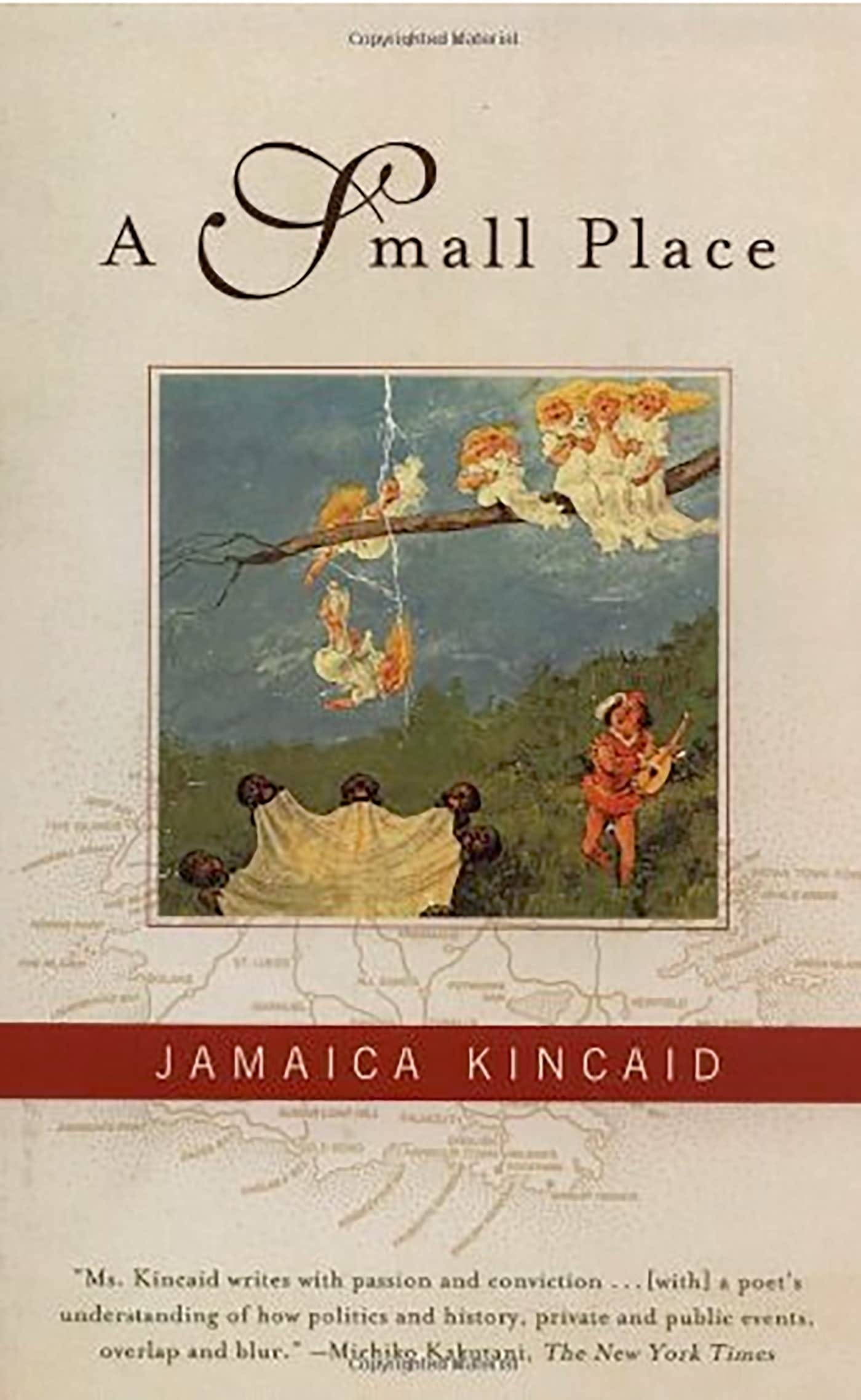
If ignorance is bliss, then Jamaica Kincaid’s mission is to open your eyes. Thank you, Ritvik, for this beautiful recommendation.
It was a timely read. I immersed myself in A Small Place while in Jamaica: sipping coffee at a Starbucks in Montego Bay and reclining on a beach bed on Seven Mile Beach in Negril. Perhaps if I weren’t there solely to visit Ritvik, that would be ironic. Maybe it still is.
I’ll start with style, then move on to content—there’s beauty in both.
Kincaid is a phenomenal writer. Her sentences pack a punch. For example:
The papers of the slavetrading family from Barbuda (the Codringtons), the records of their traffic in human lives, were being auctioned. The government of Antigua made a bid for them. Someone else made a larger bid. He was the foreigner. His bid was the successful bid. He then made a gift of these papers to the people of Antigua. And what does it mean, the records of one set of enemies, bought by another enemy, given to the people who have been their victims as a gift?
Kincaid could have said: “A foreigner outbid the government of Antigua for papers from a slave trading family—ironically, he then gifted them to the descendants of the enslaved.” Instead, we get a beautiful series of sentences, each layering on top of the previous one, until the final point lands with biting irony.
The beginning of the book is written in the second person (“you”):
You will be surprised, then, to see that most likely the person driving this brand-new car filled with the wrong gas lives in a house that, in comparison, is far beneath the status of the car; and if you were to ask why you would be told that the banks are encouraged by the government to make loans available for cars, but loans for houses not so easily available; and if you ask again why, you will be told that the two main car dealerships in Antigua are owned in part or outright by ministers in government.
The story walks through the assumed experience of vacationing in Antigua. With every confusing thought a tourist might brush aside, Kincaid opens Pandora’s box, unveiling the grim realities beneath the tourist trap. She doesn’t let you see only one side of the story.
After all, the darker histories complete the picture: why certain mansions exist, why the library was demolished and never restored, why expensive Japanese cars are subsidized more than housing, why those same cars sound terrible, why Antiguans aren’t allowed on their own beaches except as servants, and why a country club for white people still exists. Each of these injustices fuels Kincaid’s tragic, urgent anger.
I can easily see this adapted as a short film: The tourist moves through the island in one continuous shot, but just as they are about to move on, the director forces us to linger on each detail. The tourist notices a broken library on Main Street, and instead of passing by, the film whisks us back in time—maybe through CGI—to reveal how it was destroyed and why it was never rebuilt. Every new detail connects back to the original scene, illustrating how the neglect is woven into the island’s fabric.
A Small Place opens eyes. It reveals the deep-seated resentment and desperation of a people exploited by outsiders, by their own, and by themselves again. It does so deftly with beautiful writing. It forces perspective—even when it’s more comfortable to look away.
Selections:
The thing you have always suspected about yourself the minute you become a tourist is true: A tourist is an ugly human being
Do you know why people like me are shy about being capitalists? Well, it's because we, for as long as we have known you, were capital, like bales of cotton and sacks of sugar, and you were the commanding, cruel capitalists, and the memory of this is so strong, the experience so recent, that we can't quite bring ourselves to embrace this idea that you think so much of. As for what we were like before we met you, I no longer care. No periods of time over which my ancestors held sway, no documentation of complex civilisations, is any com-fort to me. Even if I really came from people who were living like monkeys in trees, it was better to be that than what happened to me, what I became after I met you
Again, Antigua is a small place, a small island. It is nine miles wide by twelve miles long. It was discovered by Christopher Columbus in 1493. Not too long after, it was settled by human rubbish from Europe, who used enslaved but noble and exalted human beings from Africa (all masters of every stripe are rubbish, and all slaves of every stripe are noble and exalted; there can be no question about this) to satisfy their desire for wealth and power, to feel better about their own miserable existence, so that they could be less lonely and empty—a European disease. Eventually, the masters left, in a kind of way; eventually, the slaves were freed, in a kind of way. The people in Antigua now, the people who really think of themselves as Antiguans (and the people who would immediately come to your mind when you think about what Antiguans might be like; I mean, supposing you were to think about it), are the descendants of those noble and exalted people, the slaves. Of course, the whole thing is, once you cease to be a master, once you throw off your master's yoke, you are no longer human rubbish, you are just a human being, and all the things that adds up to. So, too, with the slaves. Once they are no longer slaves, once they are free, they are no longer noble and exalted; they are just human beings.
The library building was damaged. This was in 1974, and soon after that a sign was placed on the front of the building saying, “THIS BUILDING WAS DAMAGED IN THE EARTHQUAKE OF 1974. REPAIRS ARE PENDING.” The sign hangs there, and hangs there more than a decade later, with its unfulfilled promise of repair
This was a really crisp segway to describe a hospital and use that to reflect a national conscious
You must not wonder what exactly happened to the contents of your lavatory when you flushed it
You make a leap from being that nice blob just sitting like a boob in your amniotic sac of the modern experience to being a person visiting heaps of death and ruin and feeling alive and inspired at the sight of it
When the natives see you, the tourist, they envy you, they envy your ability to leave your own banality and boredom, they envy your ability to turn their own banality and boredom into a source of pleasure for yourself.
I believe they gave scholarships to one or two bright people each year so they could go overseas and study; I believe they gave money to children's charities; these things must have made them seem to themselves very big and good, but to us there they were, pigs living in that sty (the Mill Reef Club)
And might not knowing why they are the way they are, why they do the things they do, why they live the way they live and in the place they live, why the things that happened to them happened, lead these people to a different relationship with the world, a more demanding relationship, a relationship in which they are not victims all the time of every bad idea that flits across the mind of the world? And might not knowing why they are the way they are and why they do the things they do put in their proper place everyday and event, so that exceptional amounts of energy aren't expended on the trivial, while the substantial and the important are assembled (artfully) into a picture story ("He did this and then he did that")? I look at this place (Antigua), I look at these people (Antiguans), and I cannot tell whether I was brought up by, and so come from, children, eternal innocents, or artists who have not yet found eminence in a world too stupid to understand, or lunatics who have made their own lunatic asylum, or an exquisite combination of all three.